Sweden's Bonus Controls and Emerging Mobile Jackpot Engagement Trends
Finley Jenkins · Oct 1, 2026
Sweden's Bonus Controls and Emerging Mobile Jackpot Engagement Trends
Sweden maintains a tightly controlled gambling framework through the Swedish Gambling Authority, and this structure directly shapes how bonus offers reach players while influencing participation in mobile jackpot games. Regulations introduced in recent years limit welcome bonuses to a single instance per player and cap their value, which has prompted operators to adjust marketing strategies and has altered how users approach jackpot titles on smartphones and tablets.
Data from the authority shows that these restrictions took full effect after the 2019 re-regulation, and since then mobile jackpot sessions have displayed distinct patterns compared with desktop play. Players often complete the bonus wagering requirements on lower-volatility slots before shifting to progressive jackpot games, a sequence that appears more pronounced on mobile interfaces where touch controls simplify quick spins.
Regulatory Framework and Bonus Limitations
The Swedish model requires all licensed operators to obtain approval for bonus terms before launch, and this oversight extends to the size, duration, and eligibility rules attached to each offer. Figures released by the authority in October 2026 indicate that average bonus values have stabilized at lower levels than in neighboring markets, while the number of active bonus campaigns per operator has declined by roughly eighteen percent year-over-year.
These controls aim to reduce aggressive player acquisition tactics, yet they have also created a more predictable environment for users who prefer jackpot games. Observers note that many players now wait for specific promotional windows rather than chasing every available offer, and this waiting behavior correlates with steadier mobile participation rates during evening hours when jackpot pools typically peak.
Mobile Platforms and Jackpot Participation Data
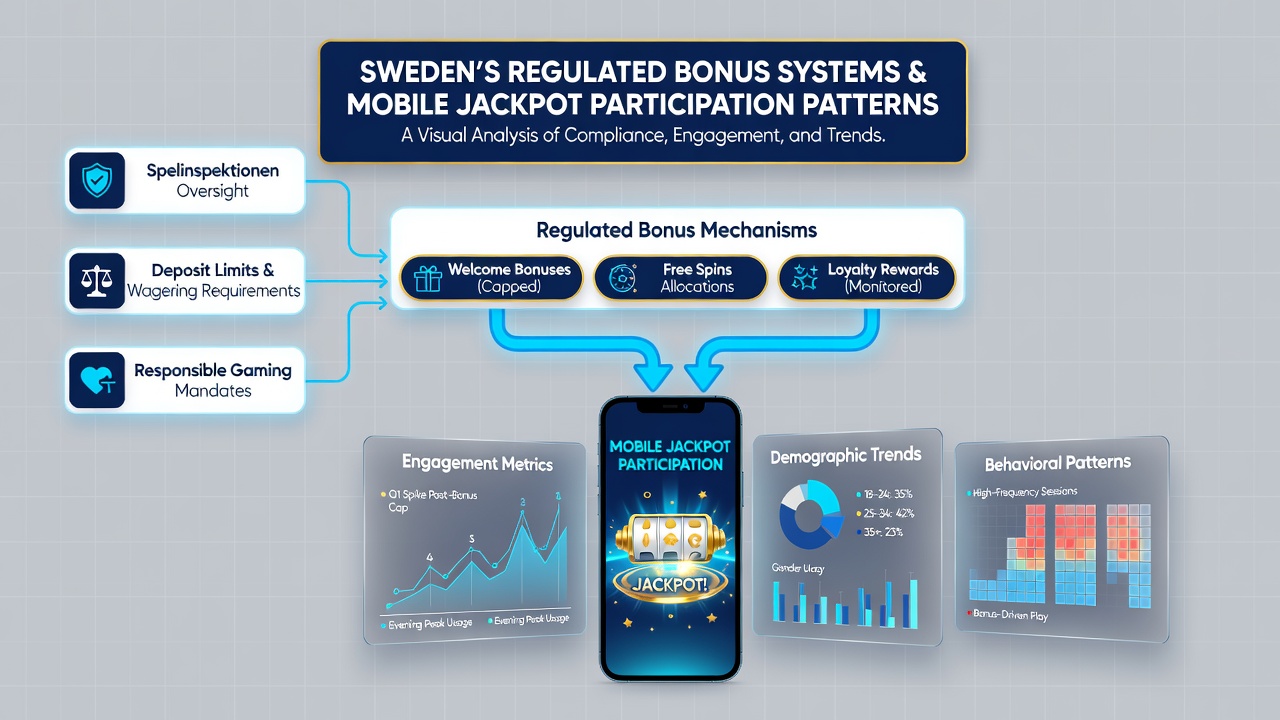
Mobile devices account for more than seventy percent of jackpot game activity within Sweden's licensed market, according to aggregated operator reports submitted to the authority. Participation patterns reveal that sessions lasting between eight and twelve minutes occur most frequently on weekdays, while weekend play extends to twenty-minute averages, often including multiple jackpot attempts within a single sitting.
Because bonus funds must be used within strict timeframes, many players allocate them to mobile jackpot games that offer rapid round completion. This approach allows users to meet turnover conditions efficiently before the bonus expires, and the pattern has become especially visible in titles with lower minimum bets that still contribute to large progressive pools.
Player Behavior Shifts Observed in 2026
Research compiled by the European Gaming and Betting Association highlights that Swedish users exhibit higher retention on mobile jackpot titles when bonuses carry moderate wagering multipliers. Lower multipliers appear to encourage longer play sessions rather than rapid bonus depletion, and this trend holds across both iOS and Android platforms.
One study tracking anonymized data from licensed operators found that players who receive a regulated bonus are thirty-two percent more likely to try at least one jackpot game during the bonus period than those playing without active promotions. The same analysis shows that mobile jackpot contributions to total handle have risen steadily since the bonus caps were enforced, suggesting the restrictions channel activity toward games that already carry built-in excitement through accumulating prizes.
Operator Adjustments and Market Response
Licensed operators have responded by designing bonus structures that align with regulatory limits while still appealing to jackpot enthusiasts. Many now offer free spins tied directly to specific mobile jackpot titles, and these targeted promotions satisfy both compliance rules and player preferences for immediate access to high-stakes features.
Industry reports indicate that conversion rates from bonus activation to jackpot play remain stable even as overall bonus volume has decreased. Operators achieve this stability by emphasizing game features such as buy-a-bonus options and enhanced mobile interfaces that reduce friction during jackpot rounds. Those adjustments help maintain engagement without violating the single-bonus rule enforced by the authority.
Conclusion
Sweden's regulated bonus systems continue to influence mobile jackpot participation through clear limits on offer frequency and value. Participation data from 2026 demonstrates consistent mobile usage patterns that operators accommodate within the existing framework, while the authority monitors outcomes to ensure responsible play remains central to the market structure. These dynamics illustrate how regulatory choices shape player pathways toward jackpot games on mobile devices without restricting access to the licensed environment.